Goldendoodle body language: what your dog is telling you
Dogs talk constantly. They just do not use words. Every tail position, ear set, and body posture is a sentence. Most owners learn the obvious ones fast: a wagging tail means happy, a growl means stop. But there is a whole language happening between those two signals, and missing it is where misunderstandings happen. Learning to read your Goldendoodle is like picking up a new language. Once you know it, you cannot unsee it.
Why body language matters
Almost every dog bite is preceded by warning signals. The dog yawned. The dog turned its head away. The dog froze. The dog growled. Somewhere in that sequence, the human either missed the signal or dismissed it.
A dog that bites out of nowhere almost never does. What actually happened is that the warning signals were not recognized. Understanding body language does not just improve your relationship with your dog. It makes interactions safer for everyone, especially children and guests who may not know how to approach a dog.
Tail signals
The tail is one of the most expressive tools a dog has, but position matters as much as movement. A wagging tail does not automatically mean a friendly dog.
| Tail position | Meaning | Context | |
|---|---|---|---|
| High and fast wag | Arousal or excitement | Not always friendly. High arousal can tip into reactivity. Read the rest of the body. | |
| Low and wide wag | Relaxed happiness | The tail sweeps loosely side to side. The body is soft. This is a genuinely happy dog. | |
| Tucked under body | Fear or submission | The dog is scared or deferring. Do not force interaction. Give space and let the dog choose. | |
| Stiff and horizontal | Alert or potential aggression | The dog is assessing a threat. Freeze with slow movements and avoid direct eye contact. | |
| Helicopter wag (whole body) | Pure joy | The whole rear end moves with the tail. There is no ambiguity here. This dog is thrilled. | |
| Flag wag (stiff and high) | Assertive or dominant | Common when greeting unfamiliar dogs. Not aggressive on its own but watch for tension in the body. |
Calming signals and stress signs
Calming signals are small behaviors dogs use to communicate discomfort, defuse tension, or tell another dog or person to back off. The term comes from Norwegian dog trainer Turid Rugaas, who documented over 30 of them. These are the signals most owners miss entirely.
| Signal | Meaning | What to do | |
|---|---|---|---|
| Yawning when not tired | Stress or discomfort | Remove the stressor if possible. Give the dog space. Do not continue pushing interaction. | |
| Lip licking or tongue flick | Stress or uncertainty | Slow down. Stop whatever is causing the feeling. A tongue flick during a greeting means the dog needs more space. | |
| Whale eye (whites visible) | Fear or conflict | Back away immediately. Whale eye means the dog feels threatened. Do not lean in, reach over, or maintain direct eye contact. | |
| Head turn away | Avoidance signal | Respect it. The dog is communicating that the interaction is too much. Give it a moment before re-engaging. | |
| Freezing | Conflict or fear | Stop all movement and give space. Freezing is one step below growling on the stress ladder. Do not push through it. | |
| Paw raise | Uncertainty or stress | Note the context. A paw raise during an unfamiliar situation means the dog is not sure what to do. Slow down. | |
| Excessive panting when not hot | Stress or anxiety | Identify the trigger and reduce exposure if possible. Panting at rest is a reliable stress indicator. | |
| Shaking off after an interaction | Releasing tension | This is a reset behavior. The dog is shaking off the stress of the interaction. It is a healthy sign, but note what triggered it. |
Relaxed versus stressed body posture
The whole body communicates, not just the tail or the ears. Before you read any individual signal, look at the overall body shape first.
A relaxed dog has a loose, wiggly quality. The muscles are soft. The body moves freely. Weight is distributed evenly or leaning slightly forward in curiosity. This dog is comfortable and engaged.
A stressed or alert dog looks stiff. The muscles tighten. The dog may stand very still or shift weight to the back legs. The overall impression is like a statue compared to the loose quality of a relaxed dog.
A fearful dog crouches low. The body may curve in on itself. The dog is trying to appear smaller. This posture combined with a tucked tail is clear submission or fear.
A play bow is the opposite of fear. The front legs drop to the ground, the rear stays up, and the whole body often wiggles. It is an explicit invitation to play and one of the clearest signals in the language.
Ear position
Ear position is one of the clearest signals dogs send, but Goldendoodles have floppy ears by default, which reduces the visible range of motion compared to upright-eared breeds. You can still read it. You just have to look more carefully.
Ears pulled back flat against the head signal fear or submission, and in higher states they can precede aggression. The ears do not just drop. They actively press back and down. On a Goldendoodle you may notice the base of the ear pulling wider or back rather than the dramatic ear flattening you see on a German Shepherd.
Ears lifted or pushed forward, as much as the floppy anatomy allows, signal alertness and attention. The dog heard something and is investigating. This is neutral and common.
Relaxed, neutral ears hanging naturally in their default floppy position mean the dog is comfortable. This is the baseline for a Goldendoodle at rest.
The stress ladder
Dogs do not escalate from calm to biting in one step. They move up a ladder, and every rung is a communication attempt. The problem is that most owners only notice the top rungs.
The ladder starts with calming signals: yawning, lip licking, head turns, paw raises, shaking off. These are the quietest communications. Then comes avoidance: the dog tries to move away or disengage. Then the growl. Then a snap, often without contact. Then a bite.
Most owners see the growl and think the dog snapped without warning. What actually happened is that the dog worked through several rungs before the growl and no one noticed.
Respecting the early rungs makes it far less likely you ever see the top ones. If a dog is showing calming signals, slow down, give space, or remove the stressor. You are intervening before the ladder gets climbed.
Reading a Goldendoodle specifically
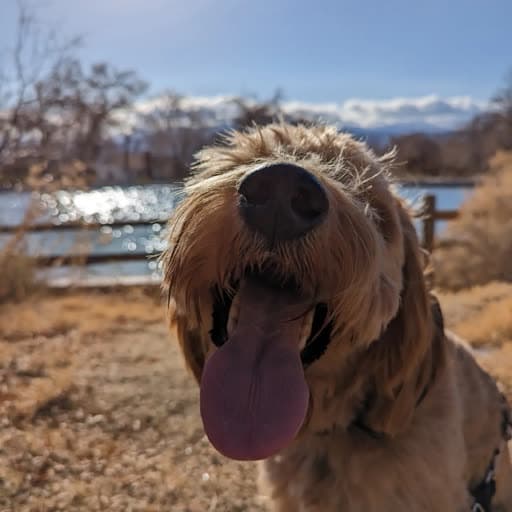
The Goldendoodle coat creates a real challenge for reading body language. The fluffy face and curly or wavy fur can hide lip tension, the tight muscle lines around the muzzle, and subtle changes in facial expression that are easy to spot on short-coated breeds.
For doodle owners, the practical fix is to prioritize body posture and ear position over facial signals. The stiff-versus-loose body test is clear regardless of coat. The ear base position is readable if you know what you are looking for. And the tail position and movement are unaffected by the coat length.
Hackles, the fur that raises along the spine when a dog is aroused or alarmed, are also less visible on dogs with tight curly coats. On a short-coated dog, hackles are unmissable. On a doodle with a dense curly coat, you may need to run a hand lightly along the spine to feel them rather than see them.
The behavioral signals compensate for what the coat hides. Calming signals, body posture, and movement patterns are all readable. Slow down, observe the whole dog, and trust what the body is doing over what the face appears to show.
Frequently asked questions
How can you tell if a Goldendoodle is stressed?
Look for calming signals first. Yawning when not tired, repeated lip licking, a head turn away, freezing in place, or a paw raise are all early stress signals. Stiff body posture and whale eye indicate higher stress. These appear well before a dog growls or snaps.
What does it mean when a Goldendoodle wags its tail?
It depends on the position and speed. A low, wide wag is relaxed happiness. A high, fast, stiff wag is arousal that is not always friendly. A tucked tail is fear or submission. A helicopter wag where the whole rear end moves is pure joy.
Why does my Goldendoodle freeze when being petted?
Freezing is a stress signal. It means the dog is in conflict and does not know what to do next. Stop and give space. Freezing sits between calming signals and growling on the stress ladder. Pushing through it often leads to a snap.
Should I punish my Goldendoodle for growling?
No. A growl is a warning. Punishing it removes the warning, not the feeling. A dog that stops growling before biting is more dangerous because there is no advance notice. Address what caused the stress instead.
Why is Goldendoodle body language harder to read than other breeds?
The fluffy coat and curly fur on a doodle's face can hide subtle facial tension and hackle raises. Focus on overall body posture and ear position rather than facial expressions. A stiff, upright body or low crouching posture communicates more clearly than anything under that coat.