Goldendoodle DNA health testing: what breeders and owners should know
Goldendoodles inherit health risks from both the Golden Retriever and Poodle gene pools. A DNA health panel tells you exactly which variants your dog carries before any symptoms show up. Here is what the tests cover, how to read the results, and what responsible breeders should provide before you ever bring a puppy home.
What DNA health testing is
A dog DNA health test analyzes a saliva or cheek swab sample to identify which genetic variants your dog carries. The test compares your dog's DNA against a library of known disease variants and reports the result for each one as clear, carrier, or affected.
These panels are not the same as a physical exam or bloodwork. They do not detect current disease. They tell you what your dog is genetically predisposed to or at risk of developing. The distinction matters: a clear result on a DNA panel does not mean the dog will never get sick. It means the dog does not carry the specific genetic variants in the panel.
The three major consumer platforms for dog DNA health testing are Embark, Wisdom Panel, and Paw Print Genetics. Each takes a different approach to depth, ancestry, and turnaround time.
The three testing platforms compared
| Platform | Health Conditions | Ancestry | Price (approx.) | Turnaround | Best For | |
|---|---|---|---|---|---|---|
| Embark Health and Ancestry | 210+ conditions | Yes, full breed breakdown | $159 to $199 | 2 to 4 weeks | Owner testing: deepest health panel with ancestry confirmation | |
| Wisdom Panel Premium | 200+ conditions | Yes, 365+ breeds | $130 to $160 | 2 to 3 weeks | Owner testing: slightly faster turnaround, similar health depth | |
| Paw Print Genetics | Customizable panel (200+ available) | No | $25 to $300+ depending on panel | 7 to 10 business days | Breeders: targeted panels, OFA submission support, clinical grade |
For most Goldendoodle owners testing their own dog, Embark is the most common choice because it combines the deepest health panel with a full ancestry breakdown in one kit. For breeders who need clinical grade results for OFA submission, Paw Print Genetics is the industry standard.
Conditions every Goldendoodle should be tested for
Goldendoodles draw from two gene pools. Golden Retrievers carry a distinct set of heritable conditions. Poodles carry another. F1B and multigenerational Goldendoodles can express variants from either side. The table below covers the core conditions any responsible testing program should include.
| Condition | Inheritance | What It Causes | Breeds That Carry It | |
|---|---|---|---|---|
| von Willebrand Disease Type I (vWD1) | Autosomal recessive | Clotting disorder causing excessive bleeding after injury or surgery | Golden Retriever, many other breeds | |
| von Willebrand Disease Type II (vWD2) | Autosomal recessive | More severe clotting disorder; spontaneous bleeding episodes possible | German Wirehaired Pointer, other wire coat breeds | |
| Progressive Retinal Atrophy prcd (PRA prcd) | Autosomal recessive | Gradual degeneration of retinal cells leading to night blindness then full blindness | Golden Retriever, Poodle, many others | |
| Progressive Retinal Atrophy (other variants) | Varies by variant | Similar progressive vision loss; multiple separate genetic causes exist | Poodle specific variants exist alongside shared prcd variant | |
| Ichthyosis (ICH) | Autosomal recessive | Flaky, thickened, greasy skin from abnormal skin cell formation | Golden Retriever (high carrier rate in this breed) | |
| Neonatal Encephalopathy with Seizures (NEWS) | Autosomal recessive | Severe neurological disorder in affected puppies; rarely survivable | Poodle (Standard and Miniature) | |
| Degenerative Myelopathy (DM) | Autosomal recessive (incomplete penetrance) | Progressive spinal cord degeneration causing hind limb weakness in older dogs | Golden Retriever, many large breeds |
Understanding carrier, affected, and clear results
Most of the conditions above follow autosomal recessive inheritance. This means a dog needs two copies of the variant (one from each parent) to be affected. One copy makes the dog a carrier. Zero copies means clear.
Here is what each status actually means for your dog and for breeding decisions:
- Clear: The dog has no copies of the variant. Cannot be affected and cannot pass the variant to offspring. The safest result for breeding.
- Carrier: The dog has one copy of the variant. Will not develop the condition (for most recessive variants) but can pass the variant to 50% of offspring. A carrier bred to another carrier produces a 25% chance of affected puppies. A carrier bred to a clear dog produces puppies that are at most carriers, never affected.
- Affected: The dog has two copies of the variant and is expected to develop the condition or already has it. Affected dogs should not be bred. Owners with an affected dog should discuss monitoring and management with their vet.
Carrier status is not an automatic disqualifier for a breeding dog. What matters is whether the dog is bred to a clear mate. Responsible breeders use carrier results to make smarter pairing decisions, not as a reason to avoid testing.
Why breeders should test both parents
The conditions listed above are recessive. A perfectly healthy looking parent dog can carry one copy of vWD, PRA prcd, ichthyosis, or NEWS and show no symptoms at all. Carrier parents bred to other carrier parents produce affected puppies. Without testing, a breeder has no way to know which pairings are safe.
For Goldendoodles, the most critical parent testing items are:
- vWD Type I (both Golden Retriever and Poodle lines)
- PRA prcd (both lines; this variant exists in both parent breeds)
- Ichthyosis (especially the Golden Retriever parent, which has a high carrier rate in this breed)
- Neonatal Encephalopathy with Seizures (especially the Poodle parent)
- Degenerative Myelopathy (both lines, though penetrance in younger dogs is lower)
Hip and elbow evaluations (OFA or PennHIP) are separate from genetic panels and should also be completed on parent dogs. These are physical imaging tests, not DNA tests, and cover structural joint risk that DNA panels do not address.
When you ask a breeder for health testing documentation, you want both the DNA panel results and the hip and elbow clearances. Either one alone is incomplete.
What owners learn from testing their own dog
Owner DNA testing is different from breeder testing. You are not making breeding decisions. You are building a health profile for your individual dog that helps you and your vet think ahead.
The most useful things owner testing reveals:
- Carrier or affected status: If your dog is a carrier or affected for vWD, your vet needs to know before any surgery. Clotting disorders require pre and post operative management that changes the standard protocol.
- Vision risk: A PRA prcd affected result means your vet should schedule baseline eye exams now and monitor retinal health annually even before symptoms appear.
- DM risk: Degenerative myelopathy has incomplete penetrance, meaning not every affected dog develops clinical signs. But knowing your dog is at elevated risk lets you start targeted hind limb strength work early, which some neurologists believe slows progression.
- Ancestry confirmation: For Goldendoodles with unclear paperwork or rescue history, ancestry results confirm the actual breed makeup and help predict adult size, coat type, and breed specific health tendencies.
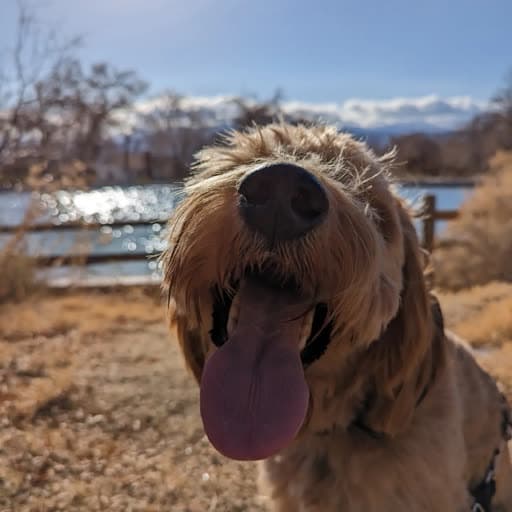
Mango had his Embark Health and Ancestry kit done at 6 months old. His results came back clear for all 210+ conditions on the panel. His ancestry confirmed 51% Poodle and 49% Golden Retriever, which matched his F1B documentation. The clear results gave us a solid baseline and helped confirm the breeder's testing claims about his parents.
Ichthyosis: the condition Golden Retriever owners often miss
Ichthyosis deserves a separate mention because the carrier rate in Golden Retrievers is unusually high. Some estimates put it at 50% or higher in the breed. This means a large number of Goldendoodle parents on the Golden Retriever side are carriers without the breeder ever knowing.
ICH affected dogs develop flaky, thickened, oily skin that requires lifelong management. It is not life threatening but it is chronic, expensive to manage, and uncomfortable for the dog. Two carrier parents bred together produce a 25% chance of affected puppies.
Any breeder of Goldendoodles or Golden Retrievers should include ichthyosis in the panel. The test is inexpensive and the carrier rate makes it a high priority.
How to submit results to OFA
OFA (Orthopedic Foundation for Animals) maintains a public database of health testing results for dogs. Breeders who submit results to OFA allow anyone to verify the test outcomes by searching the dog's registered name or microchip number at ofa.org.
Paw Print Genetics supports direct OFA submission. Embark also offers OFA integration. If a breeder uses either platform, they can share or submit results directly to the public registry. Ask for the OFA number for each parent dog and verify it yourself before committing to a puppy deposit.
Mango's Embark results
We ran Mango's Embark Health and Ancestry kit at 6 months. The swab kit arrives by mail and takes about two minutes to complete. Results came back in just under three weeks.
Mango tested clear for all 210+ health conditions on the Embark panel, including vWD Type I, PRA prcd, ichthyosis, neonatal encephalopathy, and degenerative myelopathy. His ancestry results confirmed 51% Poodle and 49% Golden Retriever, consistent with his F1B paperwork from his breeder.
The results also gave us his full trait report: coat type, color genetics, and body size markers. None of this replaces regular vet care but it gave us a strong baseline and a document we keep on file for any future vet or surgeon who needs it.
The kit Mango used is the Embark Health and Ancestry kit. It is the one we recommend for any Goldendoodle owner who wants the most comprehensive single test available.
Frequently asked questions
Should I DNA test my Goldendoodle?
Yes. A DNA health panel gives you and your vet a genetic baseline before any symptoms appear. It confirms or clarifies your breeder's health testing claims and identifies any conditions to monitor proactively. The test costs less than a single vet visit and the information is permanent.
What does Embark test for?
The Embark Health and Ancestry kit screens for over 210 genetic health conditions. For Goldendoodles this includes vWD Type I and II, PRA prcd and other PRA variants, ichthyosis, neonatal encephalopathy with seizures, degenerative myelopathy, exercise induced collapse, and many more. It also provides a complete breed ancestry breakdown.
What is carrier vs. affected in a dog DNA test?
Clear means no copies of the disease variant. Carrier means one copy. The dog will not typically develop the condition but can pass the variant to offspring. Affected means two copies and elevated disease risk. For breeding, a carrier dog paired with a clear dog produces puppies that are at most carriers, never affected.
Do Goldendoodle breeders need to DNA test?
Yes. Both parent dogs should be tested before any breeding. Responsible breeders test for at minimum vWD, PRA prcd, ichthyosis, neonatal encephalopathy, and degenerative myelopathy. Results should be submitted to OFA and verifiable by the public. Breeders who decline to provide actual test documents are not meeting the standard for responsible health testing.
How do you read dog DNA health results?
Each condition appears with a status of clear, carrier, or affected. For most recessive conditions, clear and carrier dogs will not develop the disease. An affected result means elevated risk and calls for a vet conversation about monitoring. Embark and Wisdom Panel both include plain language explanations for every condition in their results portal. Bring the summary report to your next vet visit and ask about any flagged conditions.