Nose work for Goldendoodles: the mental exercise your dog needs
A 15 minute nose work session tires Mango out more than a 45 minute walk. That sounds like marketing copy until you watch a Goldendoodle crash on their bed after a short round of box searches. This post covers why nose work fits Goldendoodles so well, the exact progression from beginner to competitor, and how to run sessions at home tonight with nothing but treats and a few household objects.
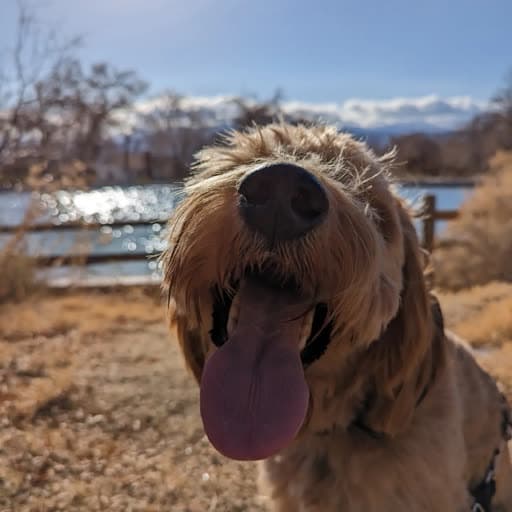
Why Goldendoodles are built for nose work
Most dogs enjoy scent games. Goldendoodles are exceptionally good at them for two reasons that come directly from their parent breeds.
Golden Retrievers were bred to use their nose to track and retrieve birds in dense cover. That instinct is deep. When a Goldendoodle puts their nose down and starts quartering an area, that is retriever drive at work. They are not just sniffing out of curiosity. They are problem solving with purpose.
Poodles add the other half. Standard Poodles were water retrievers and later became truffle hunters in France. They were selected for generations to use scent in a way that required independent thinking and sustained focus. A Poodle who gave up after one pass through a truffle forest was not a useful working dog. That persistence shows up in Goldendoodles when the search gets harder.
Put those two things together and you get a dog with strong scent drive, high working intelligence, and the patience to keep searching when the hide is not obvious. That combination is why Goldendoodles often advance through nose work levels faster than many purpose bred sporting breeds.
The 15 minute equivalency explained
The comparison between nose work and physical exercise is not just a training community saying. It comes from studying dogs after sessions of each activity. Dogs who do intense scent work show the same heart rate elevation, the same post session behavioral settling, and the same depth of sleep as dogs who did significantly longer physical exercise.
The reason is concentration. A dog on a 45 minute walk is cognitively coasting for most of it. The nose is on, but the brain is not fully engaged. During nose work, the entire attention system is locked in. The dog is processing scent information, tracking the odor cone, eliminating dead zones, and making constant decisions about where to search next. That sustained focus costs real energy. It is the same reason a 15 minute math test exhausts a child more than an hour on the playground.
For Las Vegas summers, when the pavement is too hot for an evening walk and the air temperature at 8 PM is still near 100 degrees, this matters a lot. Mango's dad Ankit runs a 10 to 15 minute nose work session after dinner on nights when going outside is not safe. Mango settles into a deep nap within 20 minutes every time.
The five level beginner progression
Nose work does not require a class to start. You need treats your dog finds genuinely exciting (not kibble, something with a strong smell) and about 10 square feet of floor space. Work through these levels in order. Most dogs can move from Level 1 to Level 4 within two weeks.
Level 1: Which hand
Hold a small piece of high value treat in one closed fist. Extend both fists toward your dog at the same time. Do nothing. Let your dog investigate. When your dog sniffs or noses the correct hand, open it immediately and let them eat the treat. Repeat five to eight times, switching which hand holds the treat randomly.
The purpose of this level is to teach one rule: using your nose to find the thing earns the reward. That rule underlies every level that follows. Most dogs figure this out in three to five repetitions. Do not move to Level 2 until your dog is consistently targeting the correct hand without hesitation.
Level 2: Muffin tin
Place a standard 12 cup muffin tin on the floor. Drop a small treat into three or four of the cups at random. Let your dog sniff the tin and eat whatever they find. On the next round, cover all 12 cups with tennis balls. Your dog now has to move the balls with their nose to uncover the treats. Vary which cups have treats every round.
This level introduces the concept of systematic searching. A dog who randomly paws the tin is not doing nose work. A dog who sniffs each cup methodically before committing is starting to use their nose correctly. The nose work starter kit typically includes a muffin tin alternative with variable difficulty if you want a more purpose built version.
Level 3: Box searches
Lay out five to eight cardboard boxes on the floor in a loose grid. All boxes are open and empty except one, which has a high value treat inside. Let your dog into the room and give a simple cue like "find it." Watch and wait. Do not point, do not hover. Let the dog search.
When the dog finds the correct box and sniffs inside, reward immediately with an additional treat from your hand on top of the one already in the box. Over several sessions, move from food hides to a small container with holes punched in the top that holds the treat, so the dog is searching for odor rather than the treat directly. This is the bridge between food searching and true scent work.
Level 4: Room search
Hide a treat or a scent container in a room your dog uses regularly. Start with easy hides: on the floor near a piece of furniture, in an open corner, next to a chair leg. Give your cue and let the dog search the whole room. Gradually move hides to higher locations and harder spots as your dog succeeds. A rolled sock at the bottom of a laundry basket, for example. Mango found a treat hidden inside a rolled sock at the bottom of a full laundry basket on his third session at this level.
At this point you are doing real nose work. The dog is following an actual odor cone through a three dimensional space, filtering out background smells, and making independent decisions. Most dogs in this stage start showing what trainers call "the change of behavior": a visible shift in the dog's posture and focus when they hit the odor. You will recognize it instantly once you see it.
Level 5: Outdoor searches
Take the game outside to a yard, a park, or a low distraction outdoor area. The challenge level jumps significantly because wind moves odor in unpredictable ways, there are competing environmental smells, and the search area is larger. Start small, maybe a 10 by 10 foot section of grass with an obvious hide, and build from there.
Outdoor nose work also prepares you for competition environments. Most AKC Scent Work and K9 Nose Work trials include at least one exterior search. Dogs who have practiced in wind and variable temperatures handle the novel elements of a trial space much more calmly.
Competing in AKC Scent Work and K9 Nose Work
If your dog takes to nose work quickly, both major programs offer a clear path from first class to titled competitor. Neither requires breed registration. Mixed breeds compete alongside purebreds.
AKC Scent Work has four target odors: birch, anise, clove, and cypress. Dogs progress through Novice, Advanced, Excellent, and Master levels, with each level requiring the dog to search more complex environments and multiple containers simultaneously. Titles include SWN (Scent Work Novice) through SWM (Scent Work Master), with specialty titles for vehicles, containers, interiors, and exteriors.
K9 Nose Work, run by the National Association of Canine Scent Work, uses birch as its primary odor. The birch essential oil is the official target scent for introductory and NW1 level competition. Titles run from NW1 through Elite, with an NW3 title considered a major achievement in the community. K9 Nose Work trials tend to have a warmer, more collaborative atmosphere than some competitive dog sports. Handlers watch each other work, share advice, and generally treat it as a community event.
Both programs have trial finders on their websites where you can locate events within driving distance. Many areas have active nose work clubs that host practice trials, which are a good way to see a trial environment before your first official entry.
Running nose work at home with no equipment
You do not need a kit to run a real nose work session. The entire first month of training can be done with household items. Here is what a no equipment session looks like at Level 3 or 4.
Collect four to six cardboard boxes from your recycling. Flatten two of them, keep two open. Add one crumpled paper bag, one empty shoebox with the lid on, and one plastic storage bin. Arrange them in a loose cluster on your living room floor. Place a high value treat inside the shoebox. Bring your dog in, give your cue, and watch.
When your dog alerts on the shoebox, reward immediately and reset with the treat in a different location. Run three or four hides per session, then end. Fifteen minutes total. The variety of container types and shapes is actually better for generalization than using a matching set of identical boxes.
For a slightly more structured home setup, a purpose built nose work starter kit includes tins and scent imprinting materials for when you are ready to move toward competition odors.
How nose work fits into a Goldendoodle enrichment routine
Nose work works best as a daily or near daily activity, not a once a week event. Short sessions done consistently build scent discrimination ability faster than occasional long sessions. Ten minutes every evening adds up to more progress and more settling effect than a 30 minute session on the weekend.
It also complements physical exercise rather than replacing it. On a normal day, Mango gets a morning walk and a nose work session in the evening. The walk covers physical needs and outdoor stimulation. The nose work session covers cognitive needs and provides the mental fatigue that leads to a calm, settled dog in the hours before bed.
On hot summer nights in Las Vegas, when the pavement holds heat until 10 PM, the nose work session becomes the primary activity. The walk gets shortened or skipped. Mango does not seem to notice. A 15 minute session inside on a 105 degree evening produces the same settled, napping dog as a full outdoor evening would on a cooler night.
If your Goldendoodle struggles with zoomies at night, has trouble settling after walks, or seems cognitively restless even after physical exercise, nose work is usually the missing piece. It addresses the part of the brain that a walk never reaches.
Frequently asked questions
Is nose work good for dogs?
Yes. Nose work is one of the most well researched forms of canine enrichment. Studies show scent work reduces cortisol levels, lowers overall arousal, and produces deep mental fatigue in a fraction of the time physical exercise requires. It is also low impact and safe for dogs of any age.
How do you start nose work with a dog?
Start with the which hand game. Hold a treat in one closed fist, offer both fists, and reward when your dog sniffs the correct hand. This teaches the dog that using their nose pays off. Progress from there to a muffin tin, then boxes, then room searches. No equipment is needed for the first several weeks.
Can dogs compete in nose work?
Yes. AKC Scent Work and K9 Nose Work both offer titling tracks open to all breeds and mixed dogs. AKC Scent Work uses four odors and runs from Novice through Master. K9 Nose Work uses birch as the primary odor and titles from NW1 through Elite. Both programs have trial finders on their websites.
How long should nose work sessions be?
Ten to fifteen minutes is ideal. Nose work is mentally intense and dogs hit a fatigue wall faster than owners expect. Short sessions done consistently produce better skill development than occasional long ones. Always end while the dog is still engaged and successful.
What is birch in dog nose work?
Birch refers to birch essential oil, which is the official target odor in K9 Nose Work competition and one of four odors in AKC Scent Work. Dogs are trained to find the scent of birch oil hidden in search areas and alert their handler at source. Birch was chosen because it is distinctive, stable, and not commonly found in everyday environments.