Goldendoodle generations. F1, F1B, F1BB, F2, F2B, multigen explained
Every Goldendoodle ad on the internet throws around F1, F1B, F2 and multigen as if buyers already speak the language. Most do not. Here is the full breakdown of what each generation actually means, how it changes the coat and allergy friendliness, and which one is right for the household you are bringing a puppy home to.
What does the F actually mean?
F stands for filial. It is borrowed from genetics and just means a generation of a hybrid cross. F1 is the first generation, F2 is the second, and so on. The B stands for backcross, which means breeding the doodle back to a Poodle to push the Poodle percentage up. BB means a second backcross. Once you understand those two letters the rest of the chart is just arithmetic.
F1 Goldendoodle. The original cross
An F1 is a Golden Retriever bred to a Poodle. Half and half on paper. The coat is usually wavy, somewhere between a flat Golden coat and a curly Poodle coat. F1 puppies tend to be the easiest to train among Goldendoodles, the friendliest with strangers, and the loosest in coat. They also shed more than higher generations, which surprises some buyers who picked a doodle for the no shed promise.
F1s are sometimes called the healthiest generation because of hybrid vigor, which is the genetic boost that comes from crossing two unrelated breed lines. The science is real but modest. A reputable breeder testing both parents matters far more than the F number on the puppy.
F1B Goldendoodle. The 75 percent Poodle pick
An F1B is an F1 Goldendoodle bred back to a Poodle. Roughly 75 percent Poodle and 25 percent Golden. This is the most popular generation for allergy households and for anyone who wants a curlier, lower shedding coat that still keeps the friendly Goldendoodle temperament.
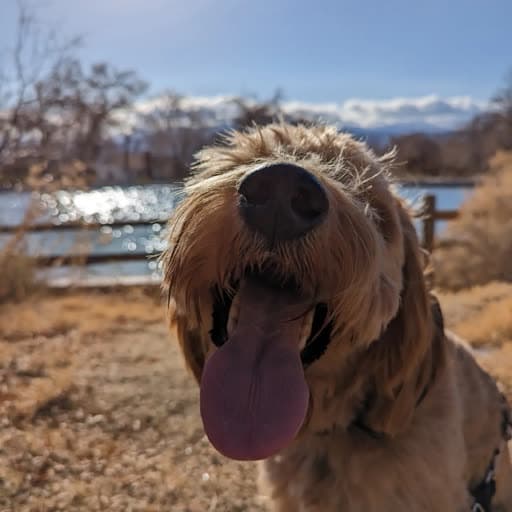
F1B coats are usually wavy to curly. Mango, our 45 lb Teddy Bear, is an F1B. He sheds almost nothing on the couch, clears most allergy households, and still has the softness and easy friendliness people want from a doodle. The trade for that coat is grooming. Plan on a brush every two or three days and a groomer visit every six to eight weeks.
F1BB Goldendoodle. The curliest standard generation
An F1BB is an F1B bred back to a Poodle a second time. About 87.5 percent Poodle and 12.5 percent Golden. The coat is almost always tightly curly, and the shed is as close to zero as you can realistically get from any dog.
F1BB is the right pick for households with severe allergies where even an F1B would be a risk. The trade is real. F1BB coats mat very fast if you skip brushing for a week. They also take longer at the groomer and cost more per visit. Some F1BB dogs also look more Poodle than Goldendoodle in face and build, which surprises buyers who were chasing the Teddy Bear look.
F2 Goldendoodle. The unpredictable middle child
An F2 is the puppy of two F1 Goldendoodles. On paper still 50 percent Poodle and 50 percent Golden. In practice, F2 litters have the widest coat variability of any common generation. One puppy in the litter might look like a Golden Retriever with no curls and heavy shedding. The puppy next to it might look almost Poodle. This is because of how recessive coat genes recombine in the second generation.
F2s can be a great pick if you find a breeder who knows the line and can predict puppy outcomes. They are usually a bad pick for allergy households because the shed coat outcomes are common in the litter and hard to predict from a six week puppy photo.
F2B Goldendoodle. F2 backcrossed to a Poodle
An F2B is an F2 Goldendoodle bred back to a Poodle. The math gets fuzzier here because the F2 parent was already a coin flip on coat genes. Most F2B puppies land around 62.5 percent Poodle and 37.5 percent Golden, but coat outcomes can still range. F2Bs are the second most popular generation after F1B and often a strong middle ground when an F1B is unavailable.
Multigen Goldendoodle. F3 and beyond
Multigen is the umbrella term for any Goldendoodle three or more generations deep. By this point breeders have usually spent years selecting for low shedding, soft coats, and stable temperaments. Multigen lines are the most predictable coat wise. Two multigen parents almost always produce puppies with very similar coats to themselves.
Multigen is the right answer for buyers who want maximum predictability and are buying from a breeder who has been working their line for years. The trade is cost. Multigen puppies usually sit at the top of the price band because they are bred to a specific look and temperament target.
| Poodle percent | Coat type | Shed level | Allergy fit | |
|---|---|---|---|---|
| F1 | 50 percent | Wavy. Sometimes flat | Light to moderate | Fair. Some allergy households react |
| F1B | 75 percent | Wavy to curly | Very light | Strong. Best common generation for allergies |
| F1BB | 87.5 percent | Tight curly | Near zero | Excellent. The pick for severe allergies |
| F2 | 50 percent on paper | Highly variable in litter | Variable | Risky. Avoid for allergy households |
| F2B | 62.5 percent | Wavy to curly | Light | Good. Solid backup pick if F1B unavailable |
| Multigen | Usually 60 to 75 percent | Consistent across litter | Very light | Strong. Predictable when from an established line |
How generation changes coat curl and shedding
The pattern across generations is consistent. More Poodle equals more curl and less shed. But the relationship is not perfectly linear. Coat genes are influenced by at least three known gene loci in dogs, and recessive flat coat genes can surface even in higher Poodle percentages. The practical rule we tell new buyers:
- F1. Plan for some shedding. Brushing twice a week is enough.
- F1B. Plan for very light shedding. Brushing every two or three days. Groomer every six to eight weeks.
- F1BB and tight curly multigen. Plan for almost no shedding but heavy grooming. Daily brushing during the puppy coat blowout. Groomer every five to six weeks.
- F2. Ask the breeder to show you both parents and ideally a sibling from a previous litter. Coat in this generation is hard to predict from a puppy photo alone.
Common myths about Goldendoodle generations
Three pieces of internet advice are repeated everywhere and wrong everywhere.
- Myth. F1 is healthier than F1B. Hybrid vigor is real but small. The biggest health predictor is whether both parents have OFA hip and elbow scores, eye exams, and DNA panels. Generation does not save a puppy from a breeder who skipped testing. See our breeder guide.
- Myth. F1B is hypoallergenic. No dog is truly hypoallergenic. F1B is the closest most buyers can practically get, and most allergy households tolerate F1Bs well. We cover the actual research in are Goldendoodles really hypoallergenic.
- Myth. F2 is just F1B with extra steps. They are completely different math. F1B is one F1 plus one Poodle. F2 is two F1s. The coat genes recombine very differently and F2 litters are the most variable.
F1B is the safest bet a doodle buyer can make on coat without paying multigen prices.
Which generation is right for you?
F2 and F2B are best when an experienced breeder can vouch for the litter. Multigen is best when you want maximum coat predictability and are willing to pay for a polished line.
How to verify the generation a breeder claims
Generation is usually self reported by the breeder. There is no governing body that audits Goldendoodle generations. Two things to ask for before you put down a deposit:
- AKC or UKC pedigree on at least one parent.Most reputable breeders run their Poodle parent through AKC registration. That paper trail is the closest you get to a real verification.
- Photos and OFA records on both parents. A breeder who cannot show you the dam and the sire of your puppy and the health testing for both should be a hard pass regardless of the generation they claim.
Final thought from a real F1B household
Generation is one input into the puppy you bring home. It matters. But it matters less than the breeder, the parents, the early socialization, and the household the puppy grows up in. Pick the generation that fits your allergy needs and your grooming capacity, then spend the rest of your buying energy vetting the breeder. That is the order most happy doodle households got right.