Teddy Bear vs Mini Goldendoodle
The two terms get used as if they are the same thing. They are not. Teddy Bear refers to the look and the bloodline, Mini refers to the size. A dog can be both, neither, or one but not the other. Here is the clean breakdown for anyone choosing a Goldendoodle puppy in 2026, with the real differences in size, coat, temperament, and what each one actually costs.
The terms decoded
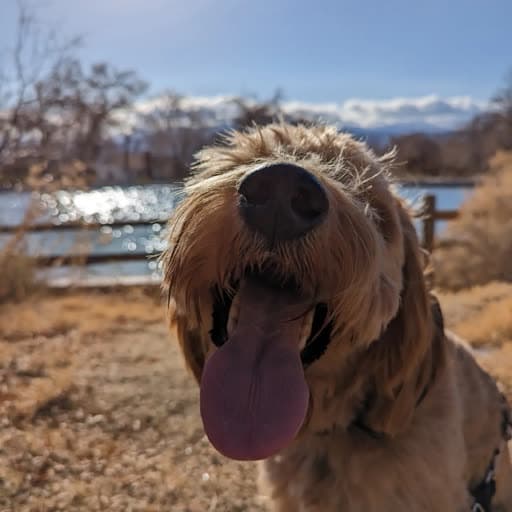
A Teddy Bear Goldendoodle describes a Goldendoodle with a specific look. Round face, full cheeks, short muzzle, plush coat that holds the teddy bear silhouette through standard grooming. Almost always F1B (75 percent poodle, 25 percent golden retriever) and almost always English cream colored, though apricot and red Teddy Bears exist. Mango is one.
A Mini Goldendoodle describes a Goldendoodle in a smaller size class. Bred from a Miniature Poodle parent instead of a Standard Poodle. Adult weight runs 15 to 35 lbs depending on generation and parents. Can be a Teddy Bear style or a more poodle leaning style.
The key takeaway: "Teddy Bear" is about look. "Mini" is about size. A puppy can be both, one but not the other, or neither.
Size comparison
Approximate adult size ranges:
- Mini Goldendoodle: 13 to 17 inches at the shoulder, 15 to 35 lbs
- Medium Goldendoodle: 17 to 20 inches, 35 to 50 lbs (Mango is 45 lbs in this class)
- Standard Goldendoodle: 20 to 26 inches, 50 to 90 lbs
- Teddy Bear Goldendoodle: any of the above, but most commonly Medium (35 to 50 lbs) which is the size that best holds the teddy bear silhouette as an adult
Petite Goldendoodles (also called Toy Goldendoodles) are marketed at under 20 lbs. They are real, but the smaller the dog, the harder the breeding genetics, and the more likely you are dealing with a less reputable breeder.
| Height (inches) | Weight (lbs) | |
|---|---|---|
| Mini | 13 to 17 | 15 to 35 |
| Medium (often Teddy Bear) | 17 to 20 | 35 to 50 |
| Standard | 20 to 26 | 50 to 90 |
| Petite or Toy | Under 14 | Under 20 |
Coat comparison
Both Teddy Bear and Mini Goldendoodles can carry the same coat types. Three textures to know:
- Wavy. Most common in F1 generations. Easier to brush, sheds slightly more, the most "golden retriever" adjacent look.
- Curly. Most common in F1B generations. Holds the teddy bear shape best. Mats faster without daily brushing. Closest to hypoallergenic.
- Straight. Rare. Closer to a golden retriever in shedding behavior. Some breeders avoid breeding straight coated doodles entirely.
Color in both: cream, English cream, apricot, red, parti (multicolor), phantom, sable. Cream and apricot are most common in Teddy Bears.
For the deeper coat science, see our generations guide and hypoallergenic explainer.
Temperament differences
Goldendoodles share core breed temperament regardless of size. Smart, social, eager to please, food motivated, affectionate with strangers and family. The main behavioral differences come from generation and individual breeding, not from size class.
Some general patterns from the doodle community though:
- Mini Goldendoodles tend to be slightly more energetic per pound, and slightly more vocal. Smaller bodies with full size doodle drive can be a handful in apartments.
- Medium Goldendoodles (often Teddy Bear sized) tend to be the most balanced. Big enough to handle daily walks, small enough to fit in any home.
- Standard Goldendoodles are calmer indoors but need significantly more daily exercise. They take up real estate.
Cost comparison
Mini Goldendoodles often cost more than Medium or Standard Goldendoodles, especially for English cream and Teddy Bear styled puppies. Approximate 2026 ranges from reputable breeders:
- Mini Goldendoodle: $3,000 to $5,500. Petite and Toy lines edge higher.
- Medium Goldendoodle (Teddy Bear style F1B): $3,500 to $5,500
- Standard Goldendoodle: $2,500 to $4,500
- Premium English Cream Teddy Bear F1B in any size: can run $5,000 to $7,500
Total lifetime cost differs less than you would think. Smaller dogs eat less and board cheaper, but grooming costs are similar regardless of size, and vet visits do not scale linearly with weight. The full breakdown is in our cost article.
Which one fits which household
Pick a Mini Goldendoodle if:
- You live in an apartment under 1,000 sq ft
- You travel frequently and want a dog that flies in cabin
- You have small children and want a manageable size
- You are an older owner and want a dog you can lift
- Your yard is tiny or you do not have outdoor space
Pick a Teddy Bear (Medium) Goldendoodle if:
- You want the iconic doodle look at full expression
- You have a typical American home with a yard
- You want a dog that can keep up on hikes and trails
- You have or plan to have older kids
- You want the most photogenic doodle for content
Pick a Standard Goldendoodle if:
- You want a true large dog that doubles as a service dog candidate
- You have plenty of space and time to exercise
- You prefer a calmer adult temperament (post adolescence)
What we'd avoid when buying either
- Breeders selling "Toy Goldendoodles" under 12 lbswith no health testing on parents. The genetics required to get that small often correlate with poor breeder ethics.
- "Teacup" anything. Not a real classification. Marketing language only.
- Generations that are not labeled. F1, F1B, F2, F2B, multigen all matter for coat predictability and shedding. A breeder who cannot explain the generation is a red flag.
- "Teddy Bear" used to justify a higher price without proof of bloodline. The look comes from genetics, not the marketing.
- Cream coat dogs without parent eye testing. English cream lines have a higher rate of inherited eye conditions. Verify OFA paperwork.
The honest truth on adult size predictions
Goldendoodles, especially F1 and F1B, can surprise you. A puppy marketed as a "small medium" can finish at 55 lbs. A Mini line puppy can finish at 12 or at 30 depending on which parent's genetics carry. Reputable breeders give you a range, not a guarantee. Anyone giving you a guarantee is either lying or breeding so narrowly that the genetics are concerning.
For predictable adult size, look at the parents' actual measured weight, plus the grandparents' weights when available. Average across both lines is the best estimate.
Quick FAQ
Are Teddy Bear Goldendoodles a real breed? No official AKC breed. The Goldendoodle itself is a designer crossbreed. Teddy Bear is a style descriptor used by reputable breeders to describe a specific F1B look.
Do Mini Goldendoodles bark a lot? Slightly more on average than Medium and Standard, but not always. Training and socialization matter much more than size.
Are Mini Goldendoodles harder to train? No, actually a touch easier in puppyhood because they are physically smaller. The training intelligence is identical.
Which is hypoallergenic, Teddy Bear or Mini?Both can be. Hypoallergenic ability comes from coat type and generation, not size. F1B with a curly coat is your best bet, regardless of Mini or Medium.
What is Mango? Mango is a 45 lb F1B Teddy Bear Goldendoodle, in the Medium size class. The full breakdown of his bloodline and coat is in our Teddy Bear Goldendoodle guide.