Goldendoodle puppy coat change: what to expect and how to manage it
Most Goldendoodle owners do not know the coat change is happening until their dog comes home from the groomer with a shave-down. The transition from puppy coat to adult coat is the single highest matting risk window in a Goldendoodle's life. Here is what the change looks like, why it matters, and exactly how to brush through it.
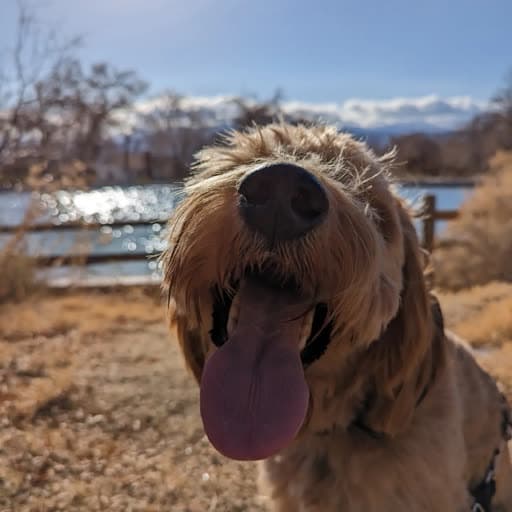
What is the Goldendoodle puppy coat?
Every Goldendoodle is born with a soft, fluffy puppy coat. It is typically silkier and less dense than the adult coat will be. It tangles less, mats more slowly, and is generally forgiving if you miss a day or two of brushing.
This coat is not permanent. Around 6 months of age the adult coat begins pushing up through the follicles and replacing the puppy coat from the skin outward. The process takes weeks to months depending on the individual dog and the coat type they inherited.
For most Goldendoodle owners, this is when grooming goes from easy to suddenly unmanageable without any obvious reason why.
When does the coat change happen?
The typical window is 6 to 12 months, with most dogs hitting peak transition between 7 and 9 months. Mango started showing signs at 7 months. Within two weeks the tangling went from occasional to constant. By month 8 the coat texture was noticeably different in sections.
Some dogs begin earlier at 5 months. A few slow developers do not fully change until 14 months. The full adult coat is usually settled by 18 months. If your dog is still in partial transition at a year old, that is normal.
The transition is not a single event. New adult coat grows in while old puppy coat is still attached and the two coat types sit on top of each other for weeks. That layer of mixed texture is the root cause of the matting problem.
| Coat Stage | Typical Age | What It Looks Like | Grooming Frequency | |
|---|---|---|---|---|
| Puppy coat | 0 to 6 months | Soft and fluffy. Tangles slowly. Easy to brush. | Three to four times per week | |
| Transition coat | 6 to 12 months | Two coat textures at once. Tangles rapidly. Dense in spots. Texture changes weekly. | Daily brushing required | |
| Adult coat | 12 to 18 months and onward | Coat fully settled into its final curl pattern. Mats on a predictable schedule. | Three to four times per week minimum |
What the transition coat looks and feels like
The first sign most owners notice is increased tangling. A dog that was easy to brush at 4 months suddenly has tangles the day after a session. The tangles tend to appear in specific zones first: behind the ears, around the collar, in the armpits, and at the base of the tail.
The texture changes too. Sections of the coat may feel coarser or denser while other sections still feel like puppy fluff. The coat may look inconsistent across the body. This is normal. The adult coat does not grow in uniformly.
Some dogs drop noticeably more loose hair during this window. Even F1B dogs with strong Poodle genetics will have more shedding than usual during the transition because the puppy undercoat is releasing. This resolves once the adult coat is fully in.
Why the transition coat causes so many mats
The matting happens for two reasons. First, the adult coat and puppy coat have different textures and they physically interlock as they rub against each other. Second, the new adult coat is denser and curlier, which means it traps debris and moisture much more effectively than the puppy coat did.
The result is that mats form deeper in the coat and form faster. The brushing routine from puppyhood no longer reaches through to the skin. A slicker brush run across the surface looks clean while a solid mat is forming two layers down.
This is the exact scenario that ends in a groomer telling you the coat is too matted to save and must be shaved. It is not unusual. It is not the groomer's fault. It happens because the owner did not know the transition was happening and did not change the brushing approach in time.
Get a metal greyhound comb and use it as a verification pass after every brushing session during the transition.
What happens if you do not brush through the transition
Within a few weeks of skipping or doing surface-only brushing, the mixed coat layers begin to felt together. Felted mats are different from tangles. A tangle is loose hair caught in a knot that can be worked apart with a comb. A felted mat is compressed hair that has fused into a solid sheet against the skin.
Felted mats cannot be brushed out. They must be shaved. The shave has to happen at skin level because the mat sits directly against the skin with no space to get a comb underneath. That is why transition-period neglect so often results in a full shave-down, not just a trim.
Beyond aesthetics, severe matting causes real pain. The mat pulls continuously on the skin, causes skin irritation underneath from trapped moisture, and can hide hot spots, cuts, or parasites that go unnoticed for weeks.
How to manage the transition coat
Daily brushing with the right tools
During the transition window, move to daily brushing. This is not optional. The coat is changing faster than a three-times-a-week schedule can keep up with.
The tool combination that works is a slicker brush for the main brushing pass and a metal greyhound comb for the verification pass afterward. The slicker does the work of breaking apart tangles. The comb confirms you got through to the skin.
Work the coat in sections. Start at the back legs and move forward. Do each section with the slicker until it moves freely, then run the comb through the same section. If the comb catches, go back to the slicker. Do not move to the next section until the comb passes cleanly.
The metal comb verification pass
The metal comb is not optional during the transition. It is the only way to verify you reached the skin.
After brushing an area with the slicker, run the wide end of the comb from root to tip in the same area. A comb that moves from root to tip without any snag means that area is clear. A comb that catches at any point means there is still compressed hair below the surface that the slicker did not reach.
Many owners skip the comb because the coat looks and feels smooth after the slicker. It usually is smooth on the surface. The problem is not the surface.
Professional grooming every 6 weeks
If your normal grooming schedule is monthly, shorten it to every 6 weeks during the transition. Mango was on a monthly professional groom schedule before his coat change. At 7 months we moved to every 6 weeks and kept that interval until his adult coat was fully settled around 13 months.
The 6 week interval gives the groomer a chance to spot and address any mats forming in areas you cannot easily reach, like deep armpits or behind the ears where the skin folds. It also keeps the coat at a manageable length so the density does not become overwhelming.
Tell your groomer specifically that your dog is in transition. A good groomer will check for mat layers during the groom and advise you on what they are finding. If they say the dog is starting to mat underneath, increase your at-home brushing immediately.
Book the 6 month groom proactively
If your dog is approaching 6 months, book a professional groom now regardless of whether you see coat changes yet. This first transition groom does two things: it removes the bulk of the old puppy coat so the new adult coat has less to compete with, and it sets a grooming baseline so future appointments are not mat-removal sessions.
Ask the groomer to do a full dematting check and to leave the coat slightly shorter than usual so you have more margin before the next groom.
How the adult coat differs from the puppy coat
The adult coat is denser, curlier in most Goldendoodles, and has a different texture. It is less silky and more prone to tangling at the root level. For most doodle owners, the adult coat feels like it requires twice the maintenance of the puppy coat.
That is an accurate feeling. The adult coat does require more maintenance. But the good news is that once you have a brushing routine dialed in for the adult coat and you know your dog's specific mat-prone zones, you are past the hardest part. The adult coat mats on a predictable schedule. The transition coat mats faster and less predictably because it is actively changing.
How coat generation affects the change
Not all Goldendoodles come out with the same adult coat. Generation matters.
F1 Goldendoodles are a 50/50 cross of Golden Retriever and Poodle. Their adult coats vary widely, from flat and wavy with light shedding to loose curly with moderate shedding. The transition for F1 dogs is often less dramatic than for later generation dogs.
F1B Goldendoodles are 75 percent Poodle. Their adult coats tend to be curlier and denser. The transition coat on an F1B mats more aggressively because the incoming adult coat is tighter. More curl means more places for hair to catch on itself. Daily brushing and a strict metal comb habit are especially critical for F1B dogs during the transition.
Mango is an F1B. His adult coat came in curly and dense, which is exactly why the transition was such a sharp change from the manageable puppy coat. Owners of F1B and multigenerational Goldendoodles should expect a more intense transition and plan the grooming schedule accordingly.
| Generation | Poodle Percentage | Adult Coat Type | Transition Intensity | |
|---|---|---|---|---|
| F1 | 50% | Wavy to loose curly. Some shedding. | Moderate. Tangles increase but usually manageable with consistent brushing. | |
| F1B | 75% | Curly and dense. Low shedding. | High. Tight curl pattern mats rapidly. Daily brushing is required. | |
| F2 or Multigenerational | Variable | Varies widely. Often curly. | High. Dense coats with unpredictable curl patterns. Most prone to transition-period matting. |
Mango's coat change at 7 months
Mango started showing coat change signs at about 7 months. The first signal was that his weekly brushing session took noticeably longer. Sections that normally took two minutes to clear were taking five. Behind his ears went from soft and easy to dense and tangle-prone within about two weeks.
We switched from brushing every few days to daily. We added the metal comb as a verification pass after every session and started finding spots where the comb caught even after the slicker looked clean. That was the moment I understood what was actually happening.
We also shortened the professional groom interval from monthly to every 6 weeks. The groomer confirmed at his 8 month appointment that the transition was in full swing and that we were staying ahead of it. By month 13 the adult coat was fully settled and we moved back to a monthly groom schedule.
The transition window was about 6 months total, from first signs to full adult coat. Daily brushing with the slicker and comb through that entire window meant we never had a mat emergency.
Frequently asked questions
When do Goldendoodles lose their puppy coat?
Most Goldendoodles begin losing their puppy coat between 6 and 12 months. The transition usually peaks around 7 to 9 months and the adult coat is fully settled by 18 months. Some dogs start as early as 5 months. Others do not fully change until 14 months. Both are normal.
Does the coat change cause shedding?
Yes, temporarily. Even low-shedding Goldendoodles will drop more loose hair during the transition than at any other point. The puppy undercoat releases as the adult coat grows in. F1 dogs with more Golden Retriever genetics shed more noticeably than F1B dogs. The extra shedding resolves once the adult coat is fully established.
How do you manage the transition coat?
Daily brushing with a slicker brush followed by a metal greyhound comb verification pass. Shorten professional groom appointments from monthly to every 6 weeks. Book a groom proactively at 6 months before the worst of the transition hits. Do not rely on surface brushing alone. The comb must move from root to tip without snagging to confirm you have cleared the coat.
Do all Goldendoodles go through a coat change?
Yes, every Goldendoodle goes through the puppy to adult transition. The intensity varies by generation and individual genetics. F1B and multigenerational Goldendoodles with high Poodle content tend to have more dramatic transitions and denser adult coats. F1 dogs typically have a less severe change.
Why is my Goldendoodle suddenly matting more at 8 months?
Because the adult coat is growing in underneath the puppy coat and the two coat textures interlock into mats faster than the old brushing routine can handle. The brushing that worked at 4 months no longer reaches through the new density. The fix is adding a metal greyhound comb after every slicker brush session and using it all the way to the skin. Surface brushing is the number one reason dogs end up matted solid during this window.