Goldendoodle summer grooming: cuts, cooling, and pool coat care
Las Vegas summers hit 115 degrees. Mango lives here. Getting his summer grooming routine wrong is not just a cosmetic problem. It is a comfort and safety problem. Here is what actually works when the pavement is hot enough to cook on and your dog swims in the pool every day.
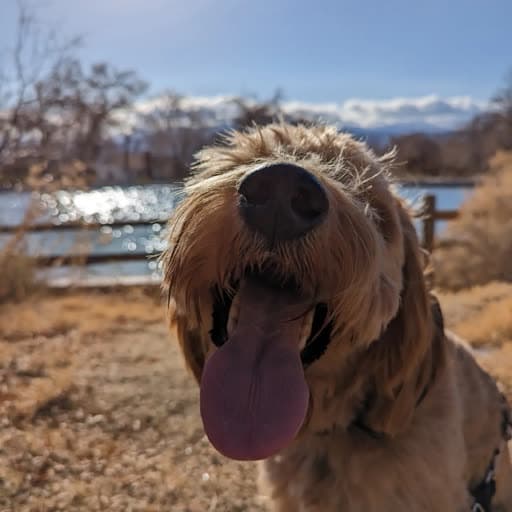
The shaving myth
A lot of dog owners shave their Goldendoodle down to the skin in summer, convinced it keeps the dog cooler. The logic sounds right. Less fur equals less heat. But it does not fully hold up.
Most Goldendoodles have a wavy or curly single coat, not a traditional double coat. True double-coated breeds like Huskies or German Shepherds should almost never be shaved because their dense undercoat acts as a heat buffer. Goldendoodles are different, but the principle still applies partially: the coat insulates in both directions. It slows heat from the environment reaching the skin.
A skin-level shave removes that buffer entirely. The skin is now exposed directly to sun, heat, and UV radiation. Goldendoodles, especially lighter-colored ones, can sunburn on the back and shoulders after a shave. You also remove the coat's ability to protect against biting insects and abrasion.
The better move is a 1 to 2 inch summer cut. Short enough that air circulates through the coat and body heat escapes. Long enough to preserve the insulating and protective layer. This is the standard many groomers recommend for dogs living in desert climates.
Recommended summer cut lengths
| Cut length | Best coat type | Pros | Cons | |
|---|---|---|---|---|
| 1 to 1.5 inches | Wavy coat | Good airflow, easy mat prevention, maintains coat protection | Needs regular brushing to stay mat-free between grooms | |
| Half inch to 1 inch | Curly coat | Easiest to maintain in summer, minimal mat risk | Very short, less coat protection from sun and insects | |
| Skin level (not recommended) | Any coat type | None in practice | Sunburn risk, removes all coat protection, not reversible quickly |
Teddy bear cut in summer
The Teddy Bear cut keeps the face rounder and fuller with longer hair around the cheeks, ears, and muzzle. It is the signature Goldendoodle look. You do not have to give it up in summer.
What many Las Vegas owners do is keep the body cut short (1 to 1.5 inches) while maintaining the face shape of the Teddy Bear cut. The body gets the cooling benefit. The face keeps the look. These are independent decisions and a good groomer handles them as two separate requests.
When you book an appointment, say it directly: "One to one and a half inches on the body, Teddy Bear shape on the face." Groomers hear this all the time in hot climates. Do not assume they will interpret a general "summer cut" to mean that. Be specific.
Pool coat care
Mango swims almost every day in summer. That habit requires a daily post-swim routine or his coat mats within 48 hours.
The routine is three steps. First, rinse with fresh water immediately after the swim. Chlorine and salt water both dry out and damage the coat if left in. A quick hose rinse takes 90 seconds. Second, blow dry thoroughly. Do not let the coat air dry. A wet doodle coat mats rapidly, especially behind the ears and in the armpits where skin folds trap moisture. Third, clean the ears. Water in the ear canal creates the environment for yeast and bacterial infections. Use a dog ear cleaner with a cotton ball, not a cotton swab. Wipe the visible ear canal gently.
After the blow dry, a light mist of leave-in conditioner spray through the coat helps with detangling and keeps the coat softer between baths. In peak summer with daily swimming this is a daily routine, not a weekly one.
More frequent grooming in summer
During the rest of the year, Mango gets a professional groom every 6 to 8 weeks. In summer that drops to every 4 to 5 weeks. Pool swimming is the main reason.
Water, heat, and daily activity all accelerate mat formation. A wavy coat dog that would hold at 7 weeks between grooms in November might show serious mat buildup at 5 weeks in July. Curly coat dogs need professional grooms even more frequently in summer, sometimes every 3 to 4 weeks, because their coat curls tighter as it grows and traps debris faster.
Home brushing frequency also increases. A three times per week brushing schedule for a wavy coat dog in winter should become near daily in summer if the dog swims regularly. The brush-out after blow drying is the most important one. That is when mat prevention actually happens.
Paw care in summer heat
Pavement in Las Vegas gets hot enough to burn a dog's paws in under a minute. The rule of thumb: if you cannot hold the back of your hand on the pavement for five seconds, it is too hot for bare paws.
Before any walk on hot surfaces, apply a thin layer of paw balm to each pad. It creates a barrier between the pad and the surface and also keeps pads from cracking. After the walk, rinse the paws with cool water. This removes desert dust, fertilizers, and any chemicals from sidewalks or parking lots that the dog could lick later.
After each walk, do a quick check. Run your fingers across each pad. Look for redness, small cracks, or anything embedded. Catching a minor surface burn early means a few days of paw balm and rest. Missing it can mean a vet visit.
If your dog suddenly starts lifting a paw during a walk, or refuses to put weight on it, assume the pavement burned them. Pick them up immediately, get to shade, pour cool water on the paw. Do not use ice. Cool water only.
Sunburn in dogs
Yes, dogs can get sunburned. Most owners do not think about it until they see it. The highest-risk areas are the nose, the skin around the muzzle, the ear tips, and anywhere the coat is thin or the skin is pink.
Goldendoodles with apricot or cream coloring often have lighter skin underneath the coat. After a shave-down or with a short summer cut, those areas have less UV protection. A dog who spends two hours in direct Las Vegas sun can get genuine sunburn on the back and shoulders.
For dogs who spend significant time in direct sun, use a dog-safe sunscreen on the exposed areas. The critical thing: never use human sunscreen on a dog. Zinc oxide is toxic to dogs if licked, and many human formulas contain oxybenzone or other compounds unsafe for animals. Only use a sunscreen specifically formulated for dogs, or one your vet has confirmed is safe.
Apply it to the nose, the muzzle, and ear tips before prolonged outdoor time. Reapply after swimming.
Frequently asked questions
Should you shave a Goldendoodle in summer?
A skin-level shave is not the best choice. A 1 to 2 inch summer cut gives cooling benefit while keeping the protective coat layer that prevents sunburn and insulates from direct heat.
How often should a Goldendoodle be groomed in summer?
Every 4 to 6 weeks for wavy coat dogs, every 3 to 4 weeks for curly coat dogs. Pool swimming and heat speed up mat formation. Home brushing increases to near daily if the dog swims regularly.
What do you do after a Goldendoodle swims?
Rinse with fresh water, blow dry fully, clean the ears. All three steps, every time. Skipping the blow dry leads to rapid mat formation.
Can a Goldendoodle get sunburned?
Yes. Pink skin around the nose, muzzle, and ear tips is most at risk. Apricot and cream-colored Goldendoodles are more susceptible. Use dog-safe sunscreen only. Never use human sunscreen on a dog.