Hiking with a Goldendoodle
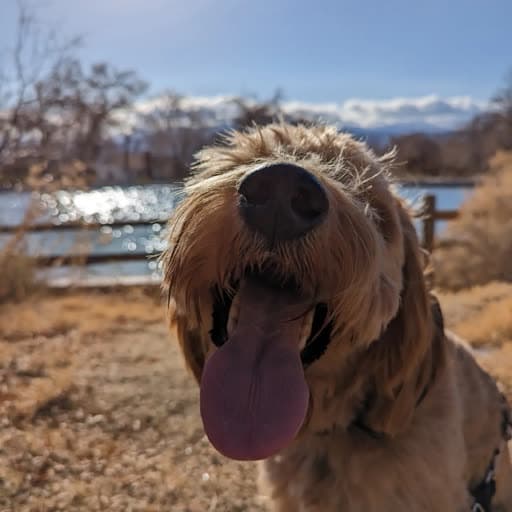
Mango lives in the desert. The Las Vegas trails (Red Rock, Mt Charleston, Calico Basin) range from sub freezing in winter to 110 degrees in summer, and they are full of cactus, foxtails, and sharp volcanic rock. We have hiked Mango from 4 months to today and learned every lesson on his paws. Here is the complete trail guide: when puppies can start, how to manage heat, what to pack, and the injuries owners need to know about.
When can a Goldendoodle puppy start hiking?
The most important thing to understand is growth plates. These are soft cartilage zones at the ends of long bones where new bone forms. They close gradually as the puppy matures. While open, they are vulnerable to injury from repeated impact, jumping, and sustained climbing.
Veterinary orthopedic research suggests that growth plate damage before closure is the leading preventable cause of orthopedic problems in dogs. Pushing a Goldendoodle puppy too hard, too soon can lead to lifelong joint issues.
| Size | Growth plates close | First real hike | Trail length cap (per outing) | |
|---|---|---|---|---|
| Mini | 10 to 14 months | 6 to 9 months | 1 mile at 6 months, 3 miles at 12 months | |
| Medium | 12 to 16 months | 9 to 12 months | 2 miles at 9 months, 5 miles at 14 months | |
| Standard | 14 to 18 months | 12 to 18 months | 3 miles at 12 months, 6 miles at 18 months |
The 5 minute rule for puppies
A useful rule of thumb from veterinary orthopedists: 5 minutes of structured exercise per month of age, twice a day, until full growth. So a 4 month old gets 20 minutes morning and 20 minutes evening. A 9 month old gets 45 minutes twice a day.
"Structured" means leashed walking on flat or gently rolling terrain. Steep inclines, rocky scrambles, and long descents are not included. Free play in the yard does not count toward the 5 minute rule because it is self regulated by the puppy.
Heat management: the desert lessons we learned
Goldendoodles overheat fast. Their dense double coat traps heat, they have a high baseline activity level, and they will keep running even when their body is in trouble. In Vegas this is the single biggest hazard. The same is true on any sunny trail above 80 degrees.
The rules we live by:
- Above 80 degrees with full sun: shift to dawn (before 7 am) or dusk (after 7 pm) hikes only.
- Above 90 degrees: skip the trail entirely or pick a water hike where the dog can swim.
- Above 100 degrees: stay home, pick an indoor activity. There is no safe outdoor hike at this temperature.
- The 7 second pavement test: place the back of your hand on the trail surface. If you cannot keep it there for 7 seconds, it is too hot for paws.
Signs of heat stroke in a Goldendoodle: heavy panting that does not slow down on rest, drool that is thick and stringy, gums turning bright red or pale, stumbling, vomiting, collapse. Move to shade, cool with water on the paws and belly (not ice cold), and call a vet immediately. Heat stroke is fatal if not treated. Our Goldendoodle summer heat safety guide has the full stage by stage breakdown.
Paw protection: balms, boots, and inspection
Goldendoodle paws are not built for harsh terrain. Soft pads, fur between the toes that catches debris, and pink underbellies that burn on hot rock. They need preparation.
The three layer approach:
1. Balm before the hike. Musher's Secret or Bag Balm rubbed into the pads before leaving. Creates a barrier against hot surfaces, salt, and minor cuts. Reapply on long hikes.
2. Boots when needed. Use boots in three situations: pavement above 80 degrees, snow with road salt, or rocky terrain that cuts pads. Ruffwear Grip Trex are the most reliable boots for a Goldendoodle. Sizes by paw width, not weight. Plan a week of indoor practice before a real hike.
3. Inspection after. Every hike, check paws for cuts, foxtails, embedded thorns, salt, and ice between toes. Between toe inspection is non negotiable. Foxtails buried between toes burrow toward the body and create infections that need surgery to remove.
Water and food on the trail
Hydration math: one ounce per pound per hour of moderate hiking. For a 45 lb Goldendoodle, that is 45 ounces (1.3 liters) per hiking hour in warm weather. We carry a 1 liter collapsible bottle for him on every hike, plus a 2 liter for us with extra for him.
Offer water every 20 to 30 minutes regardless of whether they ask. Goldendoodles often forget to drink when they are excited. Collapsible silicone bowls (Comsmart, Outward Hound) weigh nothing and are the easiest way to offer water.
For food, bring high value training treats for the trail (freeze dried liver, cheese cubes) for recall reinforcement. Avoid a full meal before a hike. A small breakfast 90 minutes before starting is fine. A full meal too close to exercise can lead to gastric dilation, especially in deep chested doodles.
Leash, long line, or off leash?
Goldendoodles are sniff and wander dogs. They inherit the Golden Retriever's prey drive on small animals plus the Poodle's intelligence to figure out routes. Recall in a low distraction backyard means nothing in a forest where everything smells better than your treats.
Three setups, ranked by what we recommend for most owners:
Long line (15 to 30 feet). The right answer for almost every Goldendoodle owner. The dog gets the off leash feel, you keep control, and you do not have to bet your dog's life on a recall that fails 1 in 20 times. Use a biothane or paracord long line, not a flexi leash.
Standard 6 foot leash. Always safe, never stressful, but boring for the dog on a long hike.
Off leash. Reserve this for dogs with rock solid recall in high distraction environments and only on legal off leash trails. Most national parks require dogs on leash. Most national forests allow off leash with voice control. Many state parks ban dogs entirely. Check the regulation before going.
What to pack for a Goldendoodle hike
Standard hike (under 4 miles, well marked trail):
- Harness (front clip if your dog pulls, Y front like Ruffwear Front Range or Web Master)
- Standard 6 foot leash plus 30 foot long line
- 1 liter collapsible water bottle plus a silicone bowl
- Poop bags, double the count
- High value training treats
- Paw balm (Musher's Secret) for hot or rocky days
- Tick remover if hiking grass or wooded trails
Long hike (4+ miles, remote):
- All of the above plus
- 2+ liters of water (carry a reservoir, not just a bottle)
- Vet records and current photo on your phone
- Tweezers and small first aid kit (gauze, vet wrap, hydrogen peroxide)
- Backup harness or leash in case primary breaks
- Cooling vest or bandana on hot days (Ruffwear Swamp Cooler)
- Boots if there is any chance of rocky scrambling
The injuries owners need to know about
The four most common hiking injuries we see in Goldendoodles:
1. Cut paw pads. Sharp rock, broken glass, hot asphalt that blisters. Treatment: clean with saline, apply antibiotic ointment, wrap with vet wrap. Limit walking until healed (usually 5 to 10 days). Deep cuts need a vet.
2. ACL or CCL tears. Goldendoodles, especially larger ones, are prone to cruciate ligament tears from sudden lateral movement (pivot to chase a squirrel, jumping down from rocks). Surgery costs $3,000 to $5,000 per knee. Prevention: avoid jumping off rocks, keep hikes age appropriate.
3. Foxtails. Western US, late spring through summer. These barbed grass seeds embed in fur, especially between toes, in ears, in the nose, and around the eyes. They migrate through tissue and require surgical removal. After every spring and summer hike, check between toes, inside ears, and along the belly. If you see any swelling or licking obsessively at one spot, go to the vet immediately.
4. Heat exhaustion. Covered above. Prevent with timing, hydrate proactively, recognize early signs.
Quick FAQ
When can a puppy start hiking? Short flat walks from 8 weeks. Real hikes wait until growth plates close: around 12 months for Mini, 14 months for Medium, 16 to 18 months for Standard.
How hot is too hot? Above 80 degrees in full sun, shift to dawn or dusk. Above 90, skip or do a water hike. The 7 second pavement test catches the rest.
Do they need boots? Most hikes, no. Boots are for hot pavement, snow with road salt, or rocky terrain that cuts pads. Paw balm before the hike covers everything else.
Off leash or long line? Long line for nearly every owner. Off leash only for dogs with proven trail recall and on legal trails.
What does Mango wear? Ruffwear Front Range harness, biothane long line, Musher's Secret on the paws. The full gear setup is on Mango's gear list.