Best dog sunscreen for Goldendoodles
Living in Las Vegas means the sun is not a gentle thing. By May the pavement is hot enough to cook an egg and the UV index sits high for months. People assume a fluffy Goldendoodle is fully shielded by that coat, and mostly that is true. But there are real spots on Mango that can burn, and after a groom they multiply. Here is everything I have learned about keeping a doodle safe in strong sun, including which sunscreens are actually safe to use and the ones that can poison a dog.
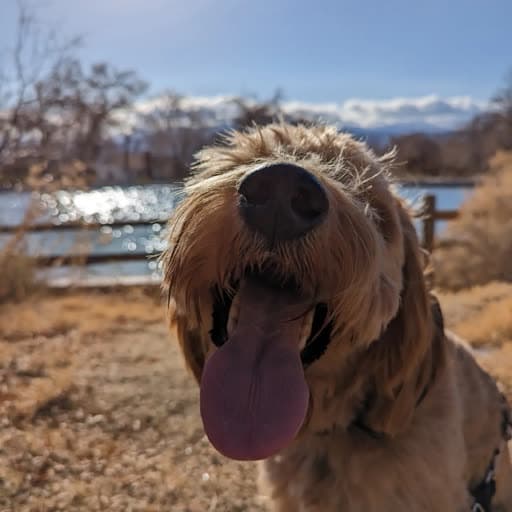
Do Goldendoodles actually need sunscreen?
The honest answer is yes, but not all over. A dense doodle coat is a genuinely good sun barrier across the back, sides, and legs. That is part of why I never recommend a full shave down in summer, and why our Goldendoodle haircut styles guide leans toward leaving length on. The fur traps a layer of air and blocks a lot of UV. The problem is the spots the coat does not cover.
On Mango the risk areas are the bridge of the nose, the thin skin at the tips of the ears, the belly, and the groin where the fur is naturally sparse. Light pigmented or pink skinned doodles burn fastest in these places. And every doodle owner knows that after a groomer takes the belly and sanitary area short, there is suddenly a lot more bare skin facing the ground and the reflected glare off concrete.
Then there is the Vegas factor. The desert sun here is relentless from spring through fall, and the UV bounces back up off pavement, sand, and pool decks. A dog rolling on its back on a hot patio is exposing the most vulnerable skin to the strongest light of the day. That is the moment sunscreen earns its place.
This is the part I need you to take seriously. Do not reach for your own bottle of sunscreen and rub it on your dog. Many human sunscreens contain zinc oxide or PABA, and both are unsafe for dogs. Zinc oxide is toxic to dogs if they lick it off and swallow it, and dogs lick almost everything, especially their nose and belly. Swallowed zinc oxide can cause vomiting and more serious internal problems. PABA is also on the do not use list for dogs.
The rule is simple. Only ever use a sunscreen that is formulated and labeled specifically for dogs. If a product does not say it is made for dogs, it does not go on your dog.
What to look for in a dog safe sunscreen
Once you are shopping in the dog category, the choices get a lot safer, but they are not all equal. Here is the short checklist I run before anything touches Mango:
- Labeled for dogs. This is non negotiable. The label should say it is made and tested for dogs, not people.
- No zinc oxide and no PABA. Reputable dog products leave these out, but read the ingredients anyway.
- Fragrance free. Heavy scents irritate skin and tempt a dog to lick the product right back off.
- Water resistant. A doodle who swims, drinks from a bowl, or pants a lot needs the coverage to stay put.
- SPF 15 to 30. A sensible range for dogs. Bigger numbers are not the point.
- Safe if licked. Assume it will be tasted. The best dog formulas are built around that reality.
Best dog sunscreen by use case
I do not use one product for everything. Different formats do different jobs, and keeping a small kit covers all of Mango's exposed spots without fuss.
Best spray for the body and shaved areas
A spray is the fastest way to cover a freshly groomed belly or a thin coated back. The Epi Pet Sun Protector spray is one of the better known dog labeled sprays and is easy to mist over a larger area, then rub in. Spray formats are my pick right after a summer groom when the sanitary trim leaves more skin exposed than usual. Spray into your hand and wipe it on near the face rather than spraying directly at the head.
Best balm for the nose and ear tips
The nose and the tips of the ears are small, precise targets, and a balm stick gives you control a spray cannot. A product like My Dog Nose It balm is made for exactly the dry, exposed nose leather that takes the most direct sun. The Warren London Dog Sunscreen is another dog labeled option that works well rubbed onto those focused spots. Balms stay where you put them, which matters on a part of the body that is always closest to the ground glare. A balm also pairs naturally with the dry nose and paw routine in our Goldendoodle paw care guide.
Best wipes for travel and touch ups
For the car, the dog park bag, or a day hike, wipes are the easiest thing to carry. The Petkin Doggy Sunwipes let you do a quick pass over the nose and ears without unscrewing a cap or aiming a spray. The Handy Hound SnoutScreen is another travel friendly pick aimed at the snout. I keep wipes in the bag we take on every hike with Mango so a midday touch up never depends on remembering the big bottle at home.
| Area | Risk level | Best format | |
|---|---|---|---|
| Nose bridge and nose leather | High, especially light noses | Balm stick | |
| Ear tips | High, thin exposed skin | Balm stick or wipe | |
| Belly and groin | High after a sanitary trim | Spray rubbed in | |
| Shaved or thin coated areas | Moderate to high | Spray | |
| Back and sides under full coat | Low, coat protects | Usually none needed |
| Format | Strength | When to reach for it | |
|---|---|---|---|
| Spray | Fast coverage over large areas | Right after a groom, thin coated dogs | |
| Balm stick | Precise, stays put | Nose and ear tips, the highest risk spots | |
| Wipes | Portable, no mess | Travel, hikes, quick midday touch ups |
How to apply it without a wrestling match
Application is half the battle with any dog, and a doodle who wants to lick the product off does not make it easier. A few things that work for us:
- Apply about 15 minutes before you head outside so it has time to set.
- For the face, put product on your fingers or a wipe first, then rub it on. Never spray toward the eyes or up the nose.
- Distract with a lick mat or a treat for the minute it takes the product to absorb so there is less licking right after.
- Reapply every four to six hours of sun exposure, and again after a swim or a long drink session.
Signs your Goldendoodle got too much sun
Even with a plan, watch for the early signs of a burn or sun irritation. Pink or red skin on the nose, belly, or ear tips, skin that feels warm or tender to the touch, flaking on the nose leather, or a dog who keeps licking one exposed spot. If you see cracking, blistering, or any sore that does not settle down, call your vet. Repeated sun damage on the same skin over years is also a longer term health concern, which is exactly why prevention is worth the small effort.
Quick FAQ
Do Goldendoodles need sunscreen? Yes on the exposed spots. The coat covers the body, but the nose, ear tips, belly, groin, and shaved areas can burn, especially in strong sun like ours in Las Vegas.
Can I use human sunscreen on my dog? No. Many human sunscreens contain zinc oxide or PABA, both unsafe for dogs. Zinc oxide is toxic if licked and swallowed. Use only a sunscreen labeled for dogs.
What SPF does a dog need? A dog formulated product in the SPF 15 to 30 range is plenty. The label mattering more than the number.
Where do dogs burn the most? The nose bridge, the ear tips, and the belly and groin where fur is thin, plus anywhere a groomer shaved close.
What does Mango use? A spray for the body, a balm stick for the nose, and wipes for travel. The current rotation lives on Mango's favorites page.