Camping with a Goldendoodle: gear, safety, and what to expect
Mango lives in Las Vegas, which puts us within two hours of Red Rock Canyon, Lake Mead, and Mount Charleston. We started taking him on camping trips in his second year and quickly learned that Goldendoodles are built for the outdoors. They are energetic, curious, and deeply bonded to their people. They want to be wherever the family is. But the outdoors comes with real hazards: wildlife, ticks, toxic water, campfire dangers, and trail rules that change by park. Here is everything we have figured out, plus the gear list that keeps Mango safe on every trip.
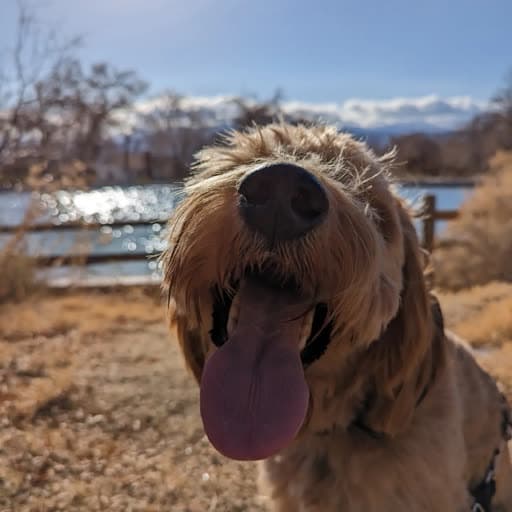
Why Goldendoodles are great camping dogs
Goldendoodles come from two working breeds that spent generations in the field. The Golden Retriever was bred to retrieve waterfowl in cold, wet terrain. The Poodle was a duck dog long before it was a show dog. That retriever history means outdoor instincts run deep.
On a camping trip, this shows up immediately. Mango lights up the moment the tent comes out of the bag. He wants to explore every inch of the campsite, swim in every body of water he sees, and stay within ten feet of us the whole time. That last part is the real gift. Goldendoodles bond tightly and they want to be where their family is. At camp, that means a dog who is genuinely happy and easy to manage.
High energy, adaptable to new environments, comfortable in water, social but not a flight risk, and coat that handles a cool mountain night. They are excellent camping companions with the right preparation.
Camping gear list for a Goldendoodle
Standard day hike gear does not cover a multi night camping trip. You need water management, overnight sleeping setup, and proper tick and wildlife protocols. Here is what goes in our kit.
| Item | Purpose | Notes | |
|---|---|---|---|
| Portable water bowl and extra water | Dehydration prevention and giardia avoidance | Do not rely on natural water sources. Bring more than you think you need. | |
| Long line or stakeout cable (30 feet) | Movement at camp without full off leash | Biothane or steel cable. Attach to a tree or tent stake. | |
| Collapsible food bowl | Keeps ants and bugs out of food | Silicone collapses flat. Feed and put away immediately. | |
| Dog sleeping pad or sleeping bag | Ground cold at altitude, cushion on rocky terrain | Even in summer, ground temps at elevation drop fast at night. | |
| First aid kit (dog specific) | Tick removal, wound care, emergency contact | Tweezers, styptic powder, bandage wrap, hydrogen peroxide, vet number. | |
| Tick prevention (current prescription product) | Prevent tick attachment before exposure | Apply 24 to 48 hours before the trip for full effectiveness. | |
| Paw wax or booties | Sharp rocks, cactus spines, hot ground | Paw wax for most terrain, booties for extreme rock scrambles. | |
| Cooling bandana or vest | Warm weather heat management | Soak in water, wrap around neck. Reapply as it dries. | |
| Dog safe insect repellent | Protect from mosquitoes and flies | DEET is toxic to dogs. Use a formula specifically made for dogs. |
For paw protection on rocky terrain, we use paw wax before hikes and keep lightweight dog booties in the kit for anything with sharp granite or lava rock. Mango tolerates the wax well. The booties take some getting used to.
Campsite rules and trail leash laws
The number one mistake people make is assuming dogs are welcome everywhere outdoors. They are not. The rules vary by land type and they matter.
National parks: Dogs must be on a 6 foot leash at all times. Most national parks do not allow dogs on hiking trails, in wilderness areas, or in backcountry zones. They are typically allowed in campgrounds, on paved roads, and in parking areas. The Grand Canyon, Yellowstone, and Zion are not doodle hiking spots.
State parks: Generally more dog friendly than national parks, but rules vary by state and by park. Most require a leash on trails. Some charge a pet fee. Check the specific park before you go.
National forests and BLM land: The most permissive for dogs. Dogs are usually allowed on all trails. Off leash rules vary by specific forest and district. Many areas allow dogs with voice control. This is where most of our Las Vegas area camping happens.
The Leave No Trace rule for dogs: clean up all waste, including on backcountry trails far from the trailhead. Pack it out. Bury it at least 200 feet from water, trails, and campsites. No exceptions.
Wildlife safety at camp
Goldendoodles are curious dogs. That is wonderful at home and potentially dangerous in wildlife country. In desert, mountain, and forest terrain, keeping the dog on leash is not optional. It is protective.
The five wildlife encounters worth knowing:
Snake bite. Common in desert and mountain terrain from spring through fall. A Goldendoodle off leash in grass or brush can step on a rattlesnake before either of them knows it. Keep the dog on trail and on leash. In Las Vegas, we use rattlesnake aversion training as an extra layer. It is about $80 and worth every penny. See our hiking guide for more on desert snake awareness.
Porcupine quills. A doodle that charges a porcupine ends up with a face full of barbed quills. A few quills on the nose is painful. Quills in the mouth, throat, or chest are an emergency vet situation. The quills migrate through tissue and can reach organs if not removed completely. Do not try to pull them at camp. Get to a vet.
Skunk spray. Not dangerous, but immediately unpleasant. Tomato juice does not work. The remedy that actually works: one quart of hydrogen peroxide, a quarter cup of baking soda, and one teaspoon of dish soap. Apply while still wet, let sit five minutes, rinse thoroughly. Repeat if needed.
Coyotes at night. Coyotes are bold near campsites. They are attracted by food smells. A Goldendoodle left outside unsupervised after dark is a target, especially if the coyote pack is testing how the dog responds. Never leave the dog staked outside unattended at night. Inside the tent is the safe place.
Bear encounters. In bear country, a barking dog that approaches a bear can escalate a neutral encounter into a dangerous one. Keep the dog on leash, carry bear spray, and store all food (including the dog's food and treats) in a bear canister or hung bear bag. Never keep food in the tent.
Campfire safety
A curious Goldendoodle and an open campfire is a real hazard. They investigate with their nose first and do not understand heat the way you do. The risks are a singed nose, a stepped on coal, or a knocked fire ring.
The rule we use: a 10 foot buffer from the active fire ring. When Mango is on his stakeout cable at camp, the cable keeps him at least 10 feet from the fire. When we are sitting around the fire, someone always has a hand on his leash.
Never leave a dog tied near an unattended fire. Coals stay hot for hours and a dog that gets bored and starts digging around the fire ring can burn their paws badly.
Water safety at camp
Natural water sources carry two primary risks for dogs: giardia and toxic algae. Both are serious. Neither is obvious to the eye.
Giardia is a waterborne parasite that lives in most natural water sources including clear mountain streams. Dogs drink from streams and develop severe diarrhea and vomiting 1 to 3 weeks later. Treatment is a course of metronidazole from the vet. Prevent it by not letting the dog drink from natural sources. Bring enough water for the dog or filter and treat trail water the same way you would for yourself.
Cyanobacteria (blue green algae) is covered in the callout above. Standing water, ponds with algae, and slow agricultural rivers are the highest risk. Do not let your dog swim in or drink from any water with visible algae growth.
The simple rule: treat all natural water as if it is unsafe until you know otherwise. Bring a dedicated water supply for your dog or bring a filter rated for protozoa removal.
Tick protocol for the outdoors
Ticks are the most common health risk for dogs on camping and hiking trips. The protocol is simple but timing matters.
Before the trip: Apply your dog's prescription tick prevention 24 to 48 hours before departure. Not the morning of. Most products need time to distribute through the skin oils before they work at full effectiveness. We use a prescription product from our vet, not an over the counter collar. Ask your vet which is right for your dog and your region.
You can also look for a vet recommended tick prevention chewable that is appropriate for your dog's weight and the tick species in your area.
During the trip: After each day outdoors, do a full body check before the dog comes into the tent. Focus on:
- Between every pair of toes
- Inside and around the ears
- Around the face and under the chin
- Inside the armpits and groin
- Along the belly and inside the back legs
Removing a tick: Use fine tip tweezers. Grasp the tick as close to the skin as possible. Pull straight up with steady pressure. No twisting. Twisting increases the chance of leaving the head embedded. After removal, clean the site with hydrogen peroxide or rubbing alcohol.
Save the tick in a small plastic bag or container if you can. If symptoms appear 1 to 2 weeks later (lethargy, fever, loss of appetite, joint pain), the tick identification helps the vet choose the right treatment.
Night camp setup
The safest place for your Goldendoodle at night is inside the tent with you. Coyotes, raccoons, and other predators are active after dark near campsites. They are attracted by food smells. A dog tied outside alone is vulnerable.
Before bed, bring all food into a bear canister or your car. Bring the dog's food bowl inside too. Then bring the dog into the tent.
Inside the tent, clip the stakeout cable to a tent pole anchor or tie out stake through the tent floor so the dog cannot wander out if you leave the zipper open. Bring the dog's regular sleeping pad or blanket from home. The familiar scent is genuinely calming in an unfamiliar environment.
The first night, expect some alertness and circling. Mango took about two hours to settle the first time. Every night after that, he went down as fast as we did.
How Goldendoodles handle camping
Most Goldendoodles take to camping quickly. The combination of continuous outdoor smells, physical exercise, and constant proximity to their family produces a genuinely happy dog. By day two, most are more relaxed at camp than they are at home.
The first 24 hours involves a lot of sniffing and alertness. Every sound is new. Other campers, birds, rustling brush. Expect your dog to be tuned in. Bring high value treats to reward calm behavior and settle the alert responses early.
By the second night, the camp smells familiar. The sounds are known. Most Goldendoodles go from alert camper to settled trail dog between day one and day two. After that, you will have a dog who knows exactly what the tent means and who gets visibly excited when the camping gear comes out.
Las Vegas area camping spots with a Goldendoodle
For Las Vegas owners, three spots within two hours make for excellent doodle camping trips:
Red Rock Canyon National Conservation Area. Dogs allowed on leash. Limited trail access compared to national parks, but the 13 mile scenic drive, campground, and several accessible trails are open to dogs. Beautiful red sandstone terrain. Note the heat window: April through October, dawn and dusk only. Our hiking guide covers the desert heat rules in detail.
Lake Mead National Recreation Area. Dogs allowed on most shoreline areas and campgrounds. Water access. The lake swimming is a big doodle draw, though check algae conditions before letting your dog in the water. Water quality varies by season and cove.
Mount Charleston (Spring Mountains National Recreation Area). Dogs allowed on most trails. Significantly cooler than the valley floor, often 20 to 30 degrees lower in summer. Dense ponderosa pine forest, aspens, and actual seasonal streams. This is our favorite doodle camping destination within day trip range of Vegas.
Quick FAQ
Are Goldendoodles good camping dogs?
Yes. They are energetic, adaptable, love outdoor smells, and stay close to their owners. With tick prevention and wildlife awareness, they make excellent camping companions.
Can my Goldendoodle sleep in the tent?
Yes, and it is recommended. Keeping the dog inside at night prevents wildlife encounters and keeps them safe in unfamiliar terrain. Bring a familiar blanket or sleeping pad and expect one restless night while they adjust.
What do I need to bring camping with my Goldendoodle?
Water (do not rely on natural sources), tick prevention applied 24 to 48 hours before, first aid kit, long line or stakeout cable, sleeping pad, and paw protection for rocky or hot terrain. The gear table above has the full list.
Are dogs allowed in national parks?
Dogs are allowed in most national parks but restricted from trails, backcountry areas, and wilderness zones. They are generally allowed in campgrounds and on paved paths. Check the specific park rules before your trip. National forests and BLM land are much more permissive.
What wildlife dangers should I know about when camping with a Goldendoodle?
Snakes in desert and mountain terrain (keep dog on leash). Porcupines (emergency vet if quills hit the throat or chest). Coyotes after dark (never leave the dog outside unsupervised). Toxic blue green algae in standing or slow moving water (potentially fatal within hours of ingestion). Keep the dog on leash in wildlife areas and inside the tent at night.