Goldendoodles and swimming: everything you need to know
Mango hit water for the first time at six months old in a hotel pool in San Diego. He swam straight toward me on his first attempt, and the hardest part of that entire trip was getting him out. Not every Goldendoodle is that immediately comfortable around water, but most lean toward it. Here is what you need to know before the first swim and every swim after.
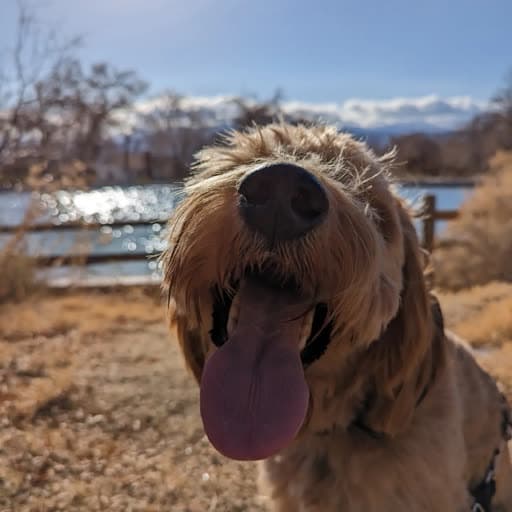
Do Goldendoodles naturally like water?
The honest answer is: most do, but not all. Golden Retrievers were bred specifically as water retrievers. That background carries into the Goldendoodle mix with enough consistency that water affinity is close to a breed trait. The Poodle side reinforces it. Poodles were originally German duck hunters and are strong swimmers.
But genes are not destiny at the individual dog level. Some Goldendoodles want nothing to do with water. Some will wade but not swim. Some, like Mango, will immediately jump into any body of water they see and look betrayed when you tell them it is time to get out. Early positive exposure during the socialization window (roughly 3 to 14 weeks) increases the odds of a water-loving adult dog, but exposure after that window still works. It just takes more patience.
The worst thing you can do is force it. A dog that is thrown into water, pushed in, or pulled in against their will learns that water is dangerous. That association is very difficult to reverse.
How to introduce your Goldendoodle to swimming
The protocol is simple: let the dog lead at every step.
Start at a shallow, calm entry point. A gently sloping lake shore, a shallow creek, the steps of a pool, or a plastic kiddie pool all work well for the first session. The dog needs to be able to touch the bottom and choose to go deeper or not.
Walk in yourself if possible. Dogs that trust their owner will often follow into the water before they would go in alone. Bring high-value treats. Every time paws hit water, reward. Every step deeper, reward. Keep the first session short and end on a positive moment before the dog gets tired or anxious.
If the dog is hesitant, do not push. Come back the next day. And the day after. Most dogs that are hesitant on day one are wading by day three if you remove all pressure.
Open water safety
Open water is a fundamentally different environment from a pool. The hazards are less predictable and some of them are invisible.
Currents are the biggest risk. Even in a calm-looking river or lake, subsurface currents can tire a dog quickly and pull them off course. A dog that is a strong swimmer in a pool can exhaust themselves fighting a current in open water. If you are swimming in any moving water, a life jacket is not optional.
Water access points matter too. A dog that jumps into a river may not be able to get out. Steep banks, slippery rocks, and no shallow exit are how swimming dogs drown. Always scout the exit before letting your dog in.
Other open water hazards to know:
- Wildlife and sharp debris on lake and river floors (cut paws are common)
- Runoff contamination after heavy rain
- Boat traffic in marinas and popular swimming areas
- Overheating in shallow, sun-exposed water in hot climates
Pool safety
Swimming pools are a more controlled environment but they come with their own checklist. The most important item: your dog must know how to find the pool steps and exit on their own before they ever swim without supervision.
Dogs that fall into pools and do not know where the steps are will swim along the wall looking for an exit until they exhaust themselves. This is how pool drownings happen even in dogs that can swim.
For the full pool safety protocol including chemical exposure, ramp options, and fencing, read our pool safety guide.
Mango's pool sessions in Las Vegas are capped at 15 minutes in summer. The combination of direct sun, heat reflecting off the pool deck, and the need to clean ears immediately after means shorter sessions are better. He gets a full rinse and ear cleaning the moment he comes out.
Life jackets for Goldendoodles
A dog life jacket is worth owning even if your dog is a strong swimmer. The value is not just buoyancy. It is the handle.
A good dog life jacket with back handle lets you lift your dog out of the water quickly from a boat, a steep bank, or any situation where the dog needs help. Without a handle, you are grabbing fur and skin. With a handle, one smooth lift and they are out.
Use a life jacket in any of these situations:
- First time in open water or any new body of water
- Moving water of any kind (rivers, tidal areas, ocean)
- Boating or paddleboarding
- Deep water where the dog cannot touch the bottom
- Any dog that is not yet a confident swimmer
- Older dogs or dogs with any joint or health issues
Look for a jacket with a visible color (orange or yellow), a D-ring for a leash attachment, and a handle that is stitched all the way around the jacket body rather than just attached at two points. The stitching quality on the handle is the detail most people overlook and the most important one for actually lifting a 45 lb dog safely.
Ear care after swimming
This is the rule that cannot be optional: clean your Goldendoodle's ears after every single swim.
Goldendoodles have floppy ears that trap moisture in the ear canal. Water that gets in during swimming sits warm and dark against the skin, which is exactly the environment ear infections need to take hold. Ear infections in dogs are painful, expensive to treat, and almost entirely preventable with consistent post-swim ear care.
The routine is straightforward. After your dog is out of the water, dry the outer ear flap with a towel. Then apply a few drops of a veterinarian-approved ear cleaner with a drying agent into the ear canal. Massage the base of the ear for 20 to 30 seconds (you will hear a squelching sound). Let the dog shake, then wipe the outer canal gently with a cotton ball or pad. Do not use cotton swabs inside the canal.
The drying agent in a good ear cleaner evaporates residual moisture that towel drying cannot reach. This is what actually prevents infections. A plain rinse with water does nothing useful. You need a cleaner formulated for this.
If you notice your dog shaking their head frequently, scratching at their ears, or if the ears smell yeasty or sour after a swim, that is the start of an infection. See your vet early. Caught in the first day or two, most ear infections are a quick course of drops. Left for a week, they become much harder to treat.
Coat care for swimming dogs
A Goldendoodle coat that gets wet regularly needs a slightly different maintenance routine than a dry-only coat.
After every pool session, rinse the coat with clean water. Pool chemicals build up in the coat over time and can dry out the skin and hair. A quick rinse removes them before they sit. After open water swims, rinse to remove any algae, sediment, or organic matter from the water.
For daily or near-daily swimmers, add a conditioning step to the weekly bath. Frequent rinsing strips some of the natural oils from the coat. A good moisturizing dog conditioner restores softness and reduces tangles that form when a curly or wavy coat dries without care.
The most important coat care rule for swimming dogs: brush before air drying, not after.
A doodle coat that dries tangled locks those tangles in permanently. When the coat is damp after a swim, work through it gently with a slicker brush or wide tooth comb before it fully dries. This takes three to five minutes and prevents the dense mat formation that builds up over a summer of daily swims if you skip it.
If you cannot brush right away, blow dry on a low heat setting while brushing. The alternative, letting a wet doodle coat air dry without brushing, is how swim season turns into a full shave-down at the groomer.
Frequently asked questions
Do Goldendoodles like to swim?
Most do. The Golden Retriever and Poodle backgrounds both contribute water affinity, and it shows up reliably in Goldendoodles. Individual dogs vary and early positive exposure helps, but you cannot assume every doodle will love water or force one that does not.
Are Goldendoodles good swimmers?
Goldendoodles are capable swimmers with good natural instincts. They are not purpose-bred water dogs, and their dense coat gets heavy when saturated, which limits endurance in long open water sessions. Supervision and a life jacket for open water are still important even for a confident swimmer.
Can Goldendoodles swim in a pool?
Yes, with supervision and a few precautions. The dog must know how to find and use the pool steps before swimming unsupervised. Rinse the coat after every session to remove chemical buildup and clean the ears immediately. Read the full pool safety guide for the complete checklist.
How do you introduce a Goldendoodle to swimming?
Start in shallow, calm water where the dog can touch the bottom. Let them wade in at their own pace. Reward every step toward the water. Walk in yourself if they will follow you. Never throw or push them in. Most hesitant dogs become comfortable swimmers within a few sessions when the pressure is removed entirely.
Do Goldendoodles need a life jacket?
In open water, moving water, on boats, or any time the dog is new to swimming: yes. A life jacket with a sturdy back handle is the safest choice because the handle lets you lift the dog out quickly in any situation. Even a strong swimmer benefits from a jacket in unpredictable conditions.